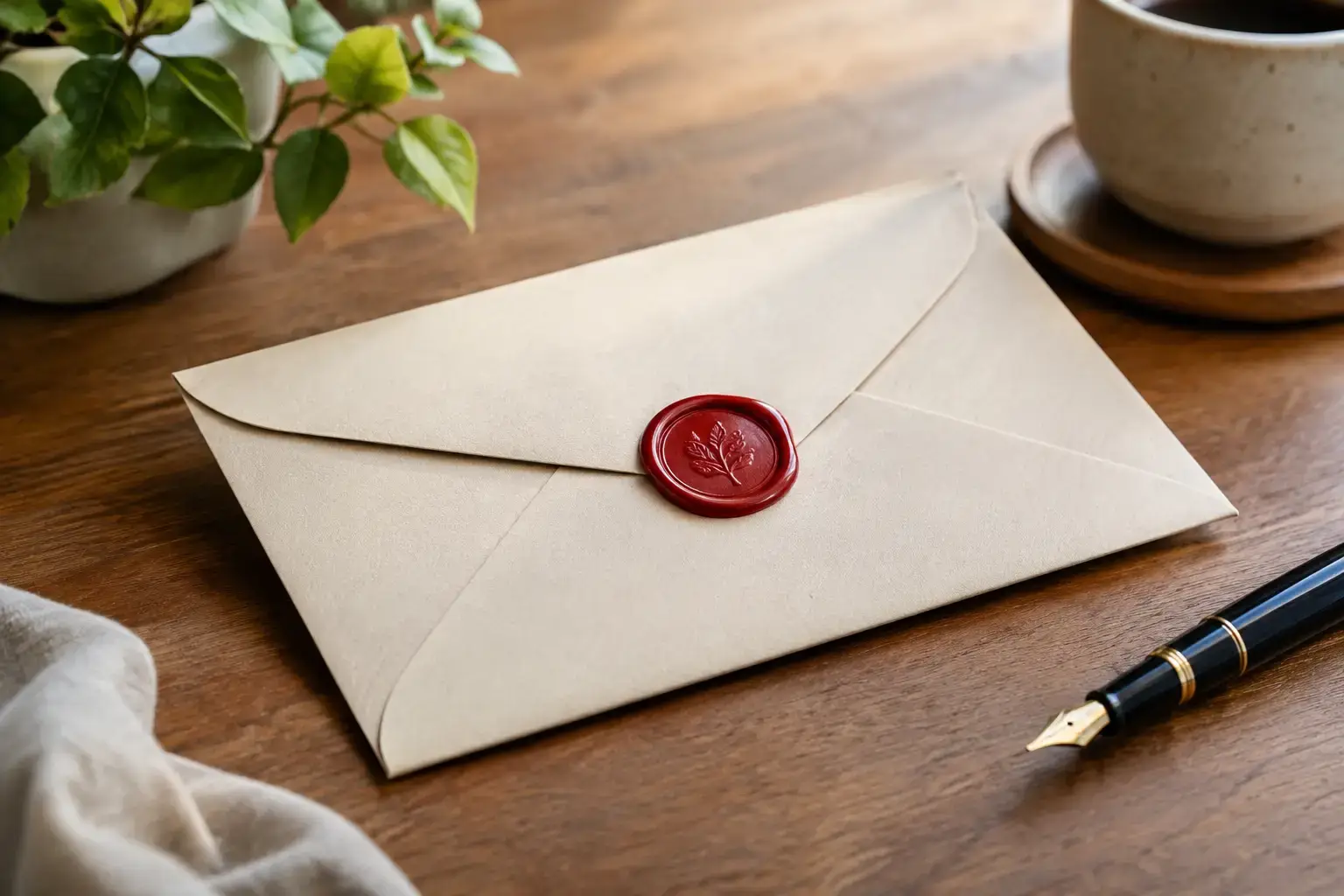
Someone can delete a text, mute a group chat, or pretend they never saw the passive-aggressive email. A wax sealed personalized letter is harder to dismiss. It arrives with weight, ceremony, and the unmistakable energy of: “Oh, this is about to be a whole thing.”
That is the point. A sealed letter turns a joke, a grievance, a breakup, or a very deserved coworker roast into a physical event. Before a single word is read, the recipient has to break the seal. That tiny act creates suspense - and makes the message feel more deliberate than something dashed off between meetings.
For gifts meant to be funny, dramatic, personal, or just a little bit petty, paper and wax do work that pixels simply cannot. The Infernal Registrar has reviewed the evidence.
Why a wax sealed personalized letter feels different
A message on a screen competes with everything else: alerts, ads, work pings, grocery reminders, the endless scroll. A letter asks for a moment. It has texture, a front and back, a name written for one specific human, and a seal that says this correspondence has been officially filed somewhere ridiculous.
That physical pause matters. When someone receives an envelope with a wax seal, they do not just read the contents. They open an experience. It feels old-fashioned in the best way, like an invitation to a secret society, a royal decree, or a notice that their ex has been assigned a cozy little corner of eternal flame.
The format also gives humor room to land. A silly message becomes funnier when it is presented with absurd seriousness. A mock-official deed, a dramatic declaration, or a condemnation for crimes against group-chat peace feels bigger because the packaging refuses to act casual.
And when the message carries real emotion beneath the joke, the ritual slows things down enough for that emotion to register. You can be furious at a bad boss, hurt by a breakup, or exhausted by a friend’s chaos without having to send a scorched-earth text at 1:14 a.m. A theatrical letter can say, “This sucked,” while keeping the focus on your own release rather than a fresh fight.
The seal is not decoration. It is the drumroll.
Wax seals have endured because they make people curious. They signal that what is inside is meant to be opened, not merely consumed. There is a little resistance, a crack, and then the reveal. That is excellent theater for a gift.
A good seal also makes the letter feel like a keepsake instead of disposable packaging. Recipients pin them to corkboards, tuck them into memory boxes, display them on desks, or immediately post the unboxing because the whole thing looks too gloriously extra to keep private.
There is a trade-off, of course. Wax is imperfect by nature. It may have tiny variations in shape, depth, or edge. Frankly, that is part of its charm. Perfectly identical packaging can feel factory-made; a real wax seal feels handled, pressed, and sent with intent. It carries the small evidence of human hands.
For a gift with a dramatic premise, that human detail matters. The envelope is not just getting the document from Point A to Point B. It is setting the scene before the document begins its official nonsense.
What should go inside a personalized letter?
The best personalized letters are specific, but not so specific that they become a confusing diary entry. Give the recipient enough detail to recognize the reference immediately: the nickname, the date, the legendary bad decision, the workplace catchphrase, the shared enemy known only as “Monday.” Then let the format do the exaggerating.
If you are gifting someone after a breakup, aim the joke toward the situation or the former offender’s fictional sentence, not at your friend’s pain. “Congratulations on surviving Derek’s podcast era” has more warmth than reopening every ugly detail. The letter should make them feel seen, not put on trial.
For a coworker, keep the blast radius sensible. A wax-sealed roast is perfect for the friend who has endured 19 calendar invites called “Quick Sync.” It is less perfect for a manager who has not demonstrated a working sense of humor. Petty can be healing. Petty with HR copied is a different genre.
For birthdays, weddings, bachelor or bachelorette weekends, and inside-joke gifts, lean into mock authority. A sentence like “By order of the Department of Eternal Side-Eye” makes a personal joke feel ceremonious. The more seriously the letter treats a completely unserious offense, the better.
Personal beats generic every time
“Hope you like this!” is pleasant. “For the woman who survived Chad, two layoffs, and that one apartment with the haunted radiator” is a story. It tells the recipient that the giver remembered the details, understood the assignment, and chose something beyond a generic gift card.
That does not mean every letter needs a novel’s worth of backstory. One sharp reference can do more than five paragraphs of explanation. The goal is recognition: a laugh, a gasp, a “you did not,” followed by immediate proof that yes, you absolutely did.
The best occasions for a little ceremonial pettiness
A wax-sealed letter works when the occasion deserves a stronger reaction than a thumbs-up emoji. Breakups are the obvious candidate, especially when friends want to show up with humor rather than advice nobody asked for. A symbolic condemnation can turn “I cannot believe he did that” into “At least he has been properly documented.”
Bad bosses, nightmare roommates, toxic neighbors, hangovers with names, and recurring family lore are equally fertile ground. So are happier milestones. A friend starting a new job may deserve formal liberation from their previous corporate dungeon. A newly single sibling may need a reminder that their freedom is worth celebrating. A birthday recipient who loves dark humor may cherish a deed that makes their aging sound legally suspicious.
HellYea Plots™ understands the particular beauty of taking a petty little feeling and giving it paperwork, ceremony, and a purpose beyond the punchline. The gag lands because the object feels real. The human impact matters because it is real, too.
Still, context is king. Do not send an elaborate damnation notice to someone who is actively in crisis, grieving a fresh loss, or likely to experience the joke as cruel. Humor can be a pressure valve, but it should never be used to deny what someone is carrying. The strongest gifts know when to be loud and when to be gentle.
Why handwritten details raise the stakes
A printed letter can look official. A handwritten name, note, or inscription makes it personal. That contrast is catnip: formal document, absurd premise, unmistakably individual recipient. It says someone did not just buy a novelty item. They appointed themselves assistant deputy secretary of your nonsense.
Handwritten elements also slow the process down for the sender. That is useful when emotions are running hot. Writing a few lines forces you to choose what you actually want to say. Maybe it is “You deserved better.” Maybe it is “I am proud of you.” Maybe it is “Your former roommate has been condemned for stealing oat milk.” All are valid filings.
If you are creating a letter for yourself, the effect can be just as powerful. Write to the version of you that tolerated too much, made it through a brutal season, or keeps blaming itself for something that was never its fault. You do not need to mail it. Seal it, keep it, or open it later when you need the reminder. Ritual is allowed to be ridiculous and meaningful at the same time.
Make the reveal worth remembering
Presentation is where a thoughtful gift becomes a story people retell. Hand over the envelope without explanation. Leave it on a birthday plate. Mail it to someone who thinks they are receiving a boring piece of correspondence. Let them notice the seal, the strange official language, and the deeply unnecessary level of commitment.
Then give them space to react. The best reaction might be loud laughter. It might be a teary “this is exactly what I needed.” It might be a photo sent to the group chat with six flame emojis and no further context. A great personalized letter does not dictate the response. It creates enough care and curiosity for the response to happen naturally.
When life hands someone another disappointing excuse, another terrible date, or another meeting that should have been an email, you cannot always fix the source of the frustration. But you can send proof that they are not imagining it, not carrying it alone, and not above assigning the whole mess a highly official address in Hell.